

Goa isn’t only about beaches—when you’re itching for a different kind of postcard moment, Dudhsagar Falls delivers. The trick is knowing how the jeep route actually works from the Goa side, and where shared vs private rides make the biggest difference.
Below is your end-to-end planning checklist: the most common jeep pickup points and approach stops, the typical way jeeps reach the waterfall area, how shared and private jeep costs usually compare, and what to pack for monsoon mud and the best photo spots.
Where Jeep Pickups Start in Goa

1. Kulem (Main Town Stop)
Kulem is one of the most common starting points used by travellers who want a smoother drive from South/Centre Goa. It’s also a practical base if you’re combining Dudhsagar with a train stop (or just want fewer last-minute surprises).
Location: Kulem, Goa.
2. Collem (Village Junction Stop)
Collem is another widely used starting point for jeeps going towards the Dudhsagar approach. If you’re coming from nearby cities like Margao/ Madgaon side, Collem can feel more convenient than reaching deep into forest roads.
Location: Collem, Goa.
3. Mollem (Forest-Edge Town)
Mollem sits close to the forest zone that controls access to the Dudhsagar area. Many travellers use Mollem as a launchpad because it’s easy to find transport from and it aligns with the usual approach roads.
Location: Mollem, Goa.
4. Castle Rock Railway Station (Rail + Road Link)
This one is for travellers who like the “see it from the rails” angle. Castle Rock Railway Station is a known rail stop in the region and often pairs well with jeep logistics—especially if you’re trying to manage time around trains.
Location: Castle Rock, Goa.
Trail Entry to Dudhsagar Falls

5. Tambdi Surla (Common Approach Area)
Tambdi Surla is one of the most used approach areas for reaching the waterfall zone. Travellers often plan a short walk after the jeep portion—so treat this stop as “where the journey starts feeling like the forest.”
Location: Tambdi Surla, Goa.
6. Bhagwan Mahavir Wildlife Sanctuary (Protected Access Zone)
Dudhsagar Falls lies within the protected region of the Bhagwan Mahavir Wildlife Sanctuary. That matters because access rules, vehicle movement, and on-the-day entry procedures can affect your timing—particularly in monsoon.
Location: Bhagwan Mahavir Wildlife Sanctuary, Goa.
7. Mhadei River (Waterfall Source)
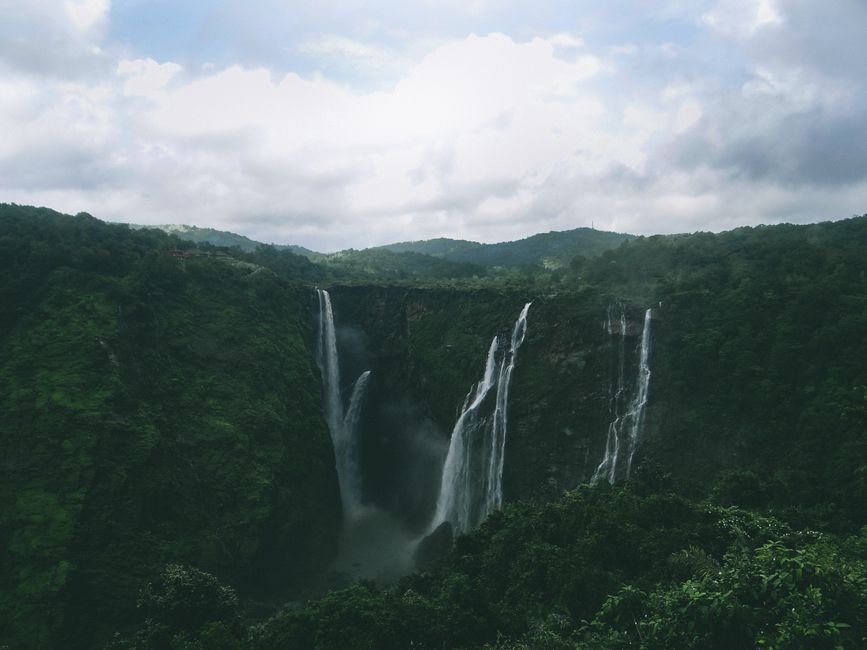
Dudhsagar is famously tied to the Mhadei River, and that’s why monsoon changes the whole experience. When the river is running fuller, you’ll get the dramatic “milk-like” cascade—but you’ll also face heavier mist, slick trails, and more unpredictable footing.
Location: Mhadei River basin, Goa.
8. Dudhsagar Falls (Waterfall View + Walk)
This is the main destination, and the key planning point is simple: the closer you get, the more you’ll rely on safe walking and designated areas. Photo moments are best when visibility and water volume are balanced—so in monsoon, don’t assume “more rain = better photos” unless you’re willing to work with mist.
Location: Dudhsagar Falls, near the Goa-Karnataka border, Goa.
Shared vs Private Jeep: Costs and Trade-offs
Shared jeep (what it’s like)
Shared jeeps are usually filled with multiple travellers going to the same general pickup/approach point. The biggest “cost saving” comes from splitting the vehicle among passengers, but the trade-off is waiting—your jeep may depart only when it fills or when the operator finds the right combination.
When shared makes sense:
- You’re flexible with departure time.
- You’re travelling solo/couple and don’t mind a bit of schedule lag.
- You want the local transport feel and are fine with a less predictable return journey.
When shared can feel annoying:
- You want a tight itinerary (like catching a train or returning before dark).
- You’re travelling with older members or anyone who struggles with muddy walking.
Private jeep (what it’s like)
Private jeeps reduce the “waiting game” and make the whole plan easier to execute end-to-end—from your chosen pickup point all the way to the nearest jeep-access point before you walk.
When private makes sense:
- Your group is 3–5 people and splitting a private jeep can close the cost gap.
- You want a more controlled timing window for waterfall photos.
- You prefer to avoid crowded seating during monsoon days.
Cost comparison: what to expect (without guessing exact rates)
Jeep pricing varies by season, the specific starting point (Kulem vs Collem vs Mollem), and whether you’re paying for one-way vs return. In general terms:
- Shared tends to be cheaper per person but slower due to waiting.
- Private tends to be more expensive overall, but you pay for time control and comfort.
Because exact figures can change frequently, we recommend you confirm the latest rates at your pickup area (or with a local operator) the same day. If you’d rather not manage it on the ground, Viator can be a convenient way to arrange a planned jeep/driver option with clearer timings—especially helpful in monsoon when roads and schedules can feel unpredictable.
Typical jeep route (the “end-to-end” version)
A common pattern looks like this:
- Start from a Goa pickup zone (often Kulem / Collem / Mollem, sometimes around rail-linked areas).
- Jeep travels along the accessible roads towards the forest approach.
- You reach the last jeep-accessible point near the Tambdi Surla approach.
- You walk the remaining stretch towards the waterfall area at Dudhsagar Falls.
On monsoon-heavy days, expect muddy patches and slower movement. Keep buffer time on both sides—especially for the return.
What to Pack for Monsoon Mud and Photo Spots
Dudhsagar looks legendary in every season, but monsoon is when it turns into a proper waterfall mood. That also means you’ll earn your photos with effort.
Monsoon essentials (pack like you’re walking, not just sightseeing)
- Waterproof footwear or grippy shoes: trails can turn slick.
- Quick-dry clothes (bring a dry layer for the return).
- Rain jacket or poncho (umbrellas can be awkward on forest paths).
- Waterproof phone pouch + small zip bags for essentials.
- Towel + a plastic cover for your bag.
- Insect repellent (especially around water and green zones).
- Cash for small needs (snacks/entry procedures where applicable).
Photo advice for monsoon:
- Don’t rely on “perfect visibility.” Instead, look for waterfall mist layers and shoot through drizzle effects.
- If you’re taking smartphone shots, wipe the lens often—mist and rain droplets stack quickly.
Where the photo moments usually happen
You’ll generally get your best waterfall photos once you’ve reached the main area near Dudhsagar Falls. For rail lovers, Dudhsagar Railway Station and the nearby rail-linked viewpoints are often part of the planning because they offer a different angle compared to the walking route.
Quick safety note: tracks and edge areas near rail lines are not a “stand anywhere” situation. Keep to permitted/obvious pedestrian areas and stay clear of moving trains.
Timing tips (so you’re not rushing in bad footing)
- In monsoon, plan for slower travel and slower walking.
- Start early where possible. It reduces crowd pressure and gives you more daylight to return safely.
- If you’re booking shared jeeps, build in extra time for waiting.
Weather reality check: monsoon + roads
When rain is heavy, jeep access and the walk can get muddy. If you’re going in peak monsoon, keep expectations realistic: the waterfall may be more dramatic, but the path may be harder. If you’re visiting outside heavy monsoon, you’ll often get better traction for photography and easier walking.
Frequently Asked Questions
What’s the best season to visit Dudhsagar Falls from Goa?
Monsoon (roughly June to September) brings the most powerful falls, while the drier months tend to be easier for walking and road conditions. If you’re going in heavy rain, carry proper waterproof gear.
Where should I start from in Goa for a jeep to Dudhsagar Falls?
Common starting points include Kulem, Collem, and Mollem. Some travellers also plan around Castle Rock Railway Station for timing flexibility.
How is a shared jeep different from a private jeep?
Shared jeeps usually cost less per person but may wait for full load or matching travellers. Private jeeps cost more overall but typically save time and make scheduling easier.
Do I need to walk even if I take a jeep?
Yes. Most jeep routes take you close to the waterfall approach, and then there’s usually a walk from the last accessible point.
What should I pack for a Dudhsagar jeep trip in monsoon?
Grippy waterproof shoes, a rain jacket/poncho, waterproof phone cover, quick-dry clothes, and an extra dry layer for the return.
Are there any safety tips for photo spots near the falls?
Stick to safe, pedestrian-friendly viewpoints and avoid risky areas (especially around rail lines). Misty monsoon conditions can make footing slippery.