

Goa’s coastline has a special kind of drama—one minute you’re on palm-fringed roads, and the next you’re standing at the edge of the Arabian Sea, with waves crashing against old fort walls. If you’re planning the Aguada Lighthouse visit, doing it via Fort Aguada is the most straightforward way to experience the views and understand the history.
This guide walks you through the route from Panaji, what to expect at Fort Aguada, practical timings (including how lighthouse access works), plus the best time for photos and a couple of nearby viewpoints you can combine for a half-day coastal trip.
Route From Panaji to Fort Aguada (A Practical Step-By-Step)
Most travellers start from Panaji (Fontainhas/Patto area, or near the Mandovi riverfront). From there, the easiest route is a straight coastal drive towards Dona Paula and then further north to Aguada/Sinquerim.
The simplest way (car/taxi)
- Start: Panaji city centre (for example, around the riverfront/Fontainhas side).
- Drive toward: Miramar / Dona Paula / Sinquerim.
- Follow signs for: Fort Aguada / Aguada (road guidance is usually clear once you near the coast).
Time & distance (typical): roughly 15–20 km and 25–45 minutes, depending on traffic and the exact starting point in Panaji.
If you’re going by two-wheeler
A two-wheeler works well here because parking is easier once you’re near the fort complex. Ride carefully on coastal stretches—some sections get crowded, and beach traffic can slow things down. Also, keep enough daylight buffer: the safest photo times tend to be in early morning and golden hour.
If you’re using buses/public transport
Local buses do connect Panaji-side areas with the north-coast towns (including the stretch that passes Dona Paula, Sinquerim and Candolim). Because routes and stop names can vary by day, use the strategy below:
- Ask for a drop at a stop near Aguada / Sinquerim / Fort Aguada.
- Confirm the direction with the driver/conductor before boarding.
Once you’re at the nearest stop, it’s usually a short final approach on foot or via a quick local taxi/auto.
Parking & last stretch
Fort Aguada is reached by road right up to the fort entry area. Expect limited parking during peak hours. If the first lot is full:
- park and walk the final bit if allowed,
- or come back later (often the easiest move).
Fort Aguada & Aguada Lighthouse Timings (What’s Realistic)

What to plan for: daylight access
For most visitors, the best approach is to plan the trip as a day visit to Fort Aguada, where you can spend time along the fort’s seafront and viewpoints. The lighthouse access itself can be more restricted and may not always be open in the same way every day.
Because exact lighthouse/tower timings can change (seasonal operations and on-the-day rules), treat this as your planning framework:
- Aim to arrive in daylight (late morning through early evening is usually comfortable for walking and photos).
- Build in time for the fort entry, viewing areas, and photos—don’t arrive close to when the fort visibly starts winding down.
“Timings” checklist before you leave Panaji
To avoid disappointment:
- Check the day’s entry rules at the fort entrance (or the ticket/entry counter).
- If you specifically want lighthouse tower access, ask whether it’s available for visitors that day.
- Plan your return with buffer—coastal roads can slow down during evenings.
How long should you stay?
If your priority is lighthouse/fort views and photos:
- 1 to 2 hours is usually enough for a relaxed visit.
- If you want a slow coastal walk + multiple photo angles: 2 to 3 hours.
What to Expect at Fort Aguada (Views, Photo Spots & Nearby Stops)

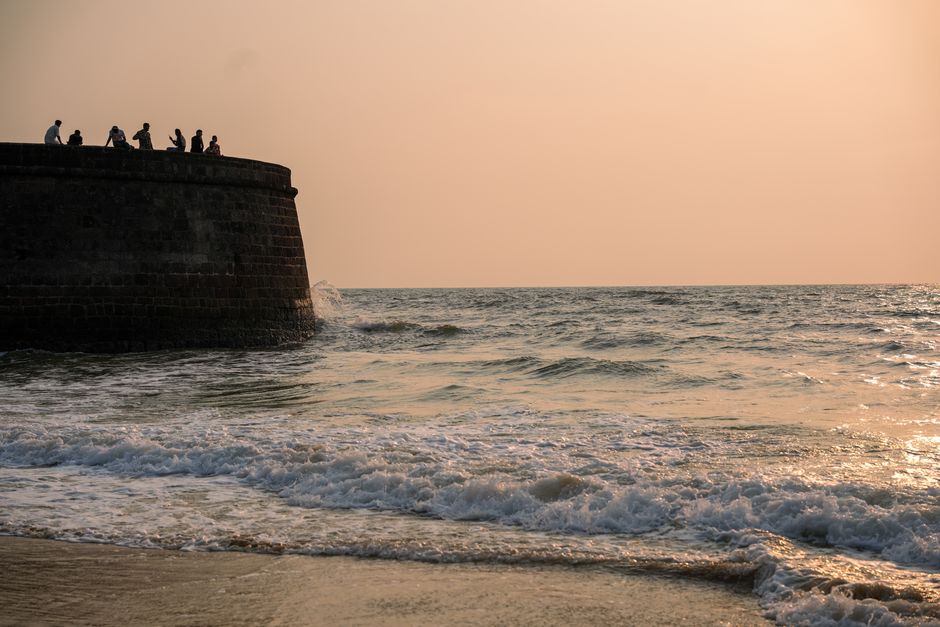
Fort Aguada is more than just a landmark—it’s a sea-facing fort complex where the shoreline scenery does half the work for your camera. Your visit typically starts at the fort entry area, then you move through viewing sections along the walls and towards the most iconic angles by the sea.
1. The main experience: sea walls + lighthouse angle
When you reach the fort’s seafront zone, you’ll notice why this spot is so photographed. You get a mix of:
- lighthouse silhouette/structure against the open sea,
- rocks and shoreline patterns (especially when waves are active),
- and long sightlines along Sinquerim/Candolim coastline.
Even if lighthouse tower access is limited, you can still enjoy strong “from the fort” views from surrounding areas.
2. Best “walk-and-shoot” strategy
For photos, don’t stay in one place. A practical approach:
- start at the most obvious lighthouse-facing angle,
- then walk along the fort’s seafront approach to capture different elevations,
- finish where the sea texture is most dramatic (often depends on wind and wave timing).
If the wind picks up, you’ll feel it at the cliff/shoreline sections—perfect for a “Goa coastal mood” look, but bring sunglasses and keep your camera strap secure.
3. Nearby viewpoints you can combine (without over-committing)
If you have a few extra hours, combine Fort Aguada with one or two close-by stops on the same coastal stretch:
- Dona Paula viewpoint area: great for an overview of the coastline and a quick stop on the way.
- Sinquerim beach stretch (near the fort side): good for low-effort walking and wave-watching.
- Candolim side (farther along): if you want a longer coastal photo walk, this is a natural continuation of the same north-coast vibe.
This keeps your plan efficient: you’re not driving back and forth across Goa.
4. Comfort tips (the stuff that makes or breaks the visit)
- Footwear: choose comfortable, grippy sandals/shoes—fort approaches can be uneven.
- Sun protection: even in the cooler months, coastal sun reflects off sand/sea.
- Water & small snacks: kiosks exist around tourist stretches, but carrying water prevents “photo time loss” when you’re thirsty.
- Wave safety: if waves are strong, follow any posted guidance and step back from unsafe edges.
5. Weather matters more here than most places
At Fort Aguada, conditions change your photos instantly:
- clear skies = lighthouse stands out sharply,
- windy weather = dramatic texture on the sea,
- monsoon months = the vibe becomes moody, but access and visibility can be limited.
Best Time to Visit Aguada Lighthouse for Photos (and When to Avoid It)
If your goal is photography (not just sightseeing), timing is everything.
Best months (overall)
For clearer skies and generally comfortable coastal visiting, aim for the winter season through early spring, roughly November to February, when Goa’s weather is more reliable.
Best time of day (for the lighthouse look)
- Early morning: softer light, fewer crowds, and a calmer sea look. Great if you want a clean lighthouse silhouette.
- Golden hour (late afternoon): warmer tones on stone and sky; the sea often looks more cinematic.
- Overcast hours: if the day is grey, the lighthouse still photographs well—just expect less contrast and more “soft dramatic” tones.
What to watch out for
- Midday glare: the fort stone and sea can produce hard reflections. If you go at midday, bring sunglasses and expect fewer “wow” skies.
- Monsoon (rough seas): the ocean can be stunning, but it’s also harder to predict access and comfort. If you’re visiting during heavy rain/wind, prioritise safety and don’t rush.
A simple plan that works
- Arrive around late morning or early afternoon.
- Photograph for 60–90 minutes.
- If you still have energy, catch one nearby coastal stop (Dona Paula or a beach-side walk).
1. Fort Aguada and Aguada Lighthouse (Day Visit)
Fort Aguada is the best base for experiencing the Aguada Lighthouse area because you’re not just viewing a landmark—you’re entering a fort complex with multiple sea-facing angles. Depending on that day’s entry rules, you may have access to more areas closer to the lighthouse, but even without tower access, the fort’s seafront viewpoints can still give you excellent photos.
Go for a relaxed pace: start with the lighthouse-facing angle, then walk along the seafront sections to capture different heights and shoreline textures. Expect the sea to be a major “background actor” here—wind and waves will change how the whole scene looks within minutes.
Location: Aguada, Goa
Timings: Plan for daylight visiting hours; lighthouse access rules can vary—confirm at the Fort Aguada entrance on the day.
Frequently Asked Questions
Is the Aguada Lighthouse open to visitors every day?
Lighthouse/tower access can be restricted and may vary. The most reliable plan is to visit Fort Aguada during daylight and confirm lighthouse access rules at the entrance on the day.
What’s the best time to visit Aguada Lighthouse from Panaji for photos?
Early morning or golden hour (late afternoon) usually gives the best light and softer skies. Winter months (roughly November to February) are typically clearer.
How far is Fort Aguada from Panaji?
It’s about 15–20 km from Panaji by road, usually around 25–45 minutes depending on traffic and your starting point.
Can I visit Fort Aguada and still do other places nearby?
Yes—Dona Paula viewpoint and the nearby Sinquerim/Candolim coastal stretches are easy to combine on the same trip.
Is a car necessary to reach Aguada Lighthouse?
Not strictly. A taxi/car is the easiest, but local buses can drop you near the north-coast stretch, from where you can complete the final approach.
What should I wear for a Fort Aguada visit?
Comfortable footwear with grip helps on uneven fort areas. Bring sun protection and water, and dress for coastal wind.