

If you’re based in Panaji but your heart is set on Calangute’s coastline, the only real question is which ride gets you there quickest. This guide breaks down the Panaji to Calangute bus vs taxi vs shared cab decision—plus the most practical boarding points and drop zones.
Below, we list 11 key terminals and landmarks along the way so you can match your transport choice to the time of day (and avoid the classic “wait and waste” moments). You’ll also see when a pre-booked transfer is worth it for time savings and stress reduction.
Bus, Shared Cab or Taxi: Fastest Choice by Time of Day

- Early morning (roughly 6:30am–10:00am): Buses and shared cabs usually move well. If you’re willing to wait for seating/seat-filling, shared cabs can be quick.
- Midday (roughly 11:00am–3:00pm): Traffic and passenger loads rise near Panaji and along the North Goa highway corridor. Taxis become the most predictable option.
- Evening (roughly 4:30pm–8:30pm): Beach traffic near Calangute/Baga slows things down. If you need a straight, low-hassle ride, a taxi is typically faster than waiting for a shared cab to fill.
For costs (very rough ranges, since they vary by demand and vehicle type), expect buses to be the cheapest, shared cabs to sit in the middle, and taxis to be the most expensive but most time-predictable.
1. Kadamba Transport Corporation (KTC) Bus Stand, Panaji (Best for budget buses)
Most Panaji-to-North-Goa buses (including routes heading toward Calangute/Baga side) are easiest to catch from the Kadamba Transport Corporation (KTC) Bus Stand area. If you’re travelling light and want to keep costs down, this is your best starting point.
Tip for speed: aim for slightly earlier than your “ideal” departure, because the ride time can stretch when buses are overfilled. If you’re trying to beat peak traffic, pick a time window before late afternoon.
Location: Panaji, Goa
2. Campal, Panaji (Best for quick taxi access)
Campal is a reliable area to begin a taxi ride from within Panaji. If you don’t want to wait at a bus bay and you’re factoring in time, taxis from the general Panaji city side (including Campal) are usually quicker to commit to.
Tip for timing: taxis are especially handy during midday and sunset-to-night windows when public transport can slow down due to crowding and route delays.
Location: Campal, Panaji, Goa
3. Miramar Beach (Best for rides starting near the waterfront)
If you’re already near the Miramar side of Panaji, starting from Miramar Beach can save you time versus travelling across town first. Taxis are easiest here; buses may also be convenient depending on the stop closest to your exact location.
When it’s best: mornings and early evenings—when traffic is lighter and you’re not rushing against beach-peak traffic.
Location: Miramar, Panaji, Goa
4. Ribandar (Best “in-between” road corridor point)
Ribandar works as a useful reference point if you’re taking a taxi or shared cab and you want to understand where you’ll be during the journey. It’s along the Mandovi river-side road corridor heading north.
How it helps your decision: if you’re watching the clock, knowing the broad corridor makes it easier to estimate when you’ll start hitting slower stretches closer to Mapusa/Calangute side.
Location: Ribandar, Goa
5. Mapusa Bus Stand (Best interchange if you’re flexible)
Many travellers find that Mapusa is the practical “in-between” anchor for heading toward Calangute/Baga. The Mapusa Bus Stand area is useful if your bus route isn’t direct or if you prefer to break the journey.
Tip for fastest travel: if you’re not sure you have a truly direct option, shared cabs and taxis can still be simpler. But for budget-minded travellers, Mapusa can be a helpful fallback.
Location: Mapusa, Goa
6. Saligao Junction (Best for timing your arrival near Calangute side)
Saligao Junction is a key waypoint before you get deeper into the Calangute/Baga reach. Even if you don’t stop here, it helps to know the moment you’re approaching the last stretch.
Tip for time-of-day planning: in late afternoon/evening, the final stretch can slow down. If your goal is beach time, aim to be arriving at the Calangute/Baga side before the heaviest evening rush.
Location: Saligao, Goa
Where to Get Dropped in Calangute (and Why It Matters)
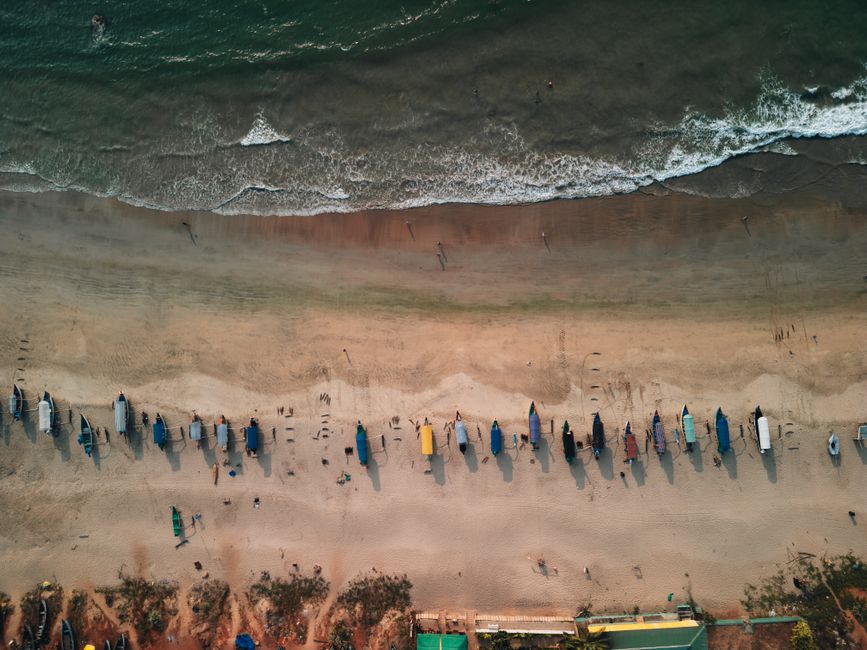
Use the landmarks below to choose your endpoint—especially if you’re carrying a beach bag, travelling with elders, or trying to reach a specific hotel quickly.
7. Calangute Bus Stand (Best for bus and shared cab arrivals)
If you’re travelling by bus or shared cab, the most common practical endpoint is the Calangute Bus Stand area. It’s convenient for onward movement to nearby hotels and the beach stretch.
Speed tip: if your shared cab is stopping here, you’ll usually save time by accepting this drop rather than insisting on a further “closer-to-my-hotel” drop inside busy lanes.
Location: Calangute, Goa
8. Calangute Beach (Best if you want direct beach access)
For travellers who don’t mind a slightly longer walk, Calangute Beach is the simplest mental destination. Taxis often drop you near the beach approach, especially outside the worst peak hours.
When it’s worth it: if you’re arriving in daylight and can quickly orient yourself to your hotel or the lane your accommodation is in.
Location: Calangute, Goa
9. St. Alex Church, Calangute (Best landmark for meet-up and last-mile navigation)
St. Alex Church is a very recognisable landmark in Calangute. If you’re coordinating with friends or your hotel reception desk is guiding you, using this church as a reference point can reduce confusion.
Practical benefit: it’s a strong option for getting “close enough” without trying to force a taxi into tight lanes.
Location: Calangute, Goa
10. Baga Junction (Best drop if you’re heading toward Baga side)
If your accommodation is closer to the Baga area, ask for a drop near Baga Junction rather than pushing right into crowded sections. This can improve both arrival speed and how quickly you can reach your stay.
Time-of-day note: in evening rush, Baga-side roads can get packed. A slightly earlier stop at a known junction often saves time compared to inching forward.
Location: Baga, Goa
11. Baga Beach (Best for direct access when you’re going all-in on Baga)
Baga Beach is the most direct “I’m here for the beach” destination. If you’re travelling by taxi and you want a straightforward arrival with minimal navigation, this is a clear endpoint.
Best times: earlier in the day or before late-evening congestion becomes heavy.
Location: Baga, Goa
Best Route, Time & Cost (Quick Guide)

Fastest option by time of day
- Morning: shared cabs can be quick if you don’t mind waiting a few minutes for the vehicle to fill. Buses are also usually dependable.
- Midday: taxi usually wins for predictable time. If you’re heat-sensitive or travelling with kids, it’s an easy call.
- Evening: taxis tend to save you time near the Calangute/Baga approach roads. If you choose shared cab, be ready for delays while it loads/unloads multiple passengers.
Typical journey time (what to expect)
Journey time depends on traffic and boarding point in Panaji. As a rule of thumb:
- Taxi: generally the most consistent, but still affected by beach-side congestion.
- Shared cab: can be quick if it fills immediately; slower if it waits.
- Bus: usually the slowest in terms of door-to-door flexibility, but cost-effective.
Rough cost expectations (single trip)
Because fares shift with season and demand, treat these as ballpark ranges:
- Bus: usually the cheapest option (often tens to low hundreds of INR per person).
- Shared cab: typically mid-range, often a few hundred INR per person.
- Taxi: typically the highest, often around the higher end of the range for the same trip.
When a pre-booked transfer is worth it
If you’re landing late, travelling with luggage, have a time-bound plan (dinner reservation, a tour pickup, or a specific check-in time), or you simply want fewer decisions once you’re tired, a pre-booked transfer can be worth it. One option some travellers use is GetTransfer, especially when you want a known pickup point and a driver who’s already arranged.
Quick “best route” advice
- If you value lowest cost, start from KTC Bus Stand, Panaji and accept a longer ride.
- If you value predictability, choose a taxi from the Panaji side (Campal or a location close to Miramar).
- If you value a balance of cost + speed, choose a shared cab, but only if you’re comfortable waiting briefly for fill-up.
Frequently Asked Questions
How long does it usually take to travel from Panaji to Calangute?
It varies with traffic and the exact starting point, but buses are typically slower, while taxis are usually the most consistent. Peak evening traffic can add time near Calangute/Baga.
Is a bus direct from Panaji to Calangute?
Some options may be direct while others route via key North Goa stops. If you’re flexible, Mapusa can be a useful fallback area.
When is shared cab fastest on this route?
Shared cabs are fastest when they fill quickly. Morning and off-peak windows usually work better; evenings can be slower due to waiting and traffic.
Should I take a taxi or shared cab if I’m going in the evening?
For evening travel, taxis are usually more time-predictable because you avoid waiting to fill and you can choose a clear drop zone like Calangute Beach or Baga Junction.
Where should I ask to be dropped in Calangute?
For easy navigation, ask near Calangute Bus Stand or a well-known landmark like St. Alex Church. If you’re heading toward Baga, Baga Junction or Baga Beach helps reduce last-mile confusion.
When is a pre-booked transfer worth it?
When you have luggage, late arrivals, time-bound plans, or you just want fewer decisions after travel. It’s also useful if you want an agreed pickup point and smoother door-to-door flow.