
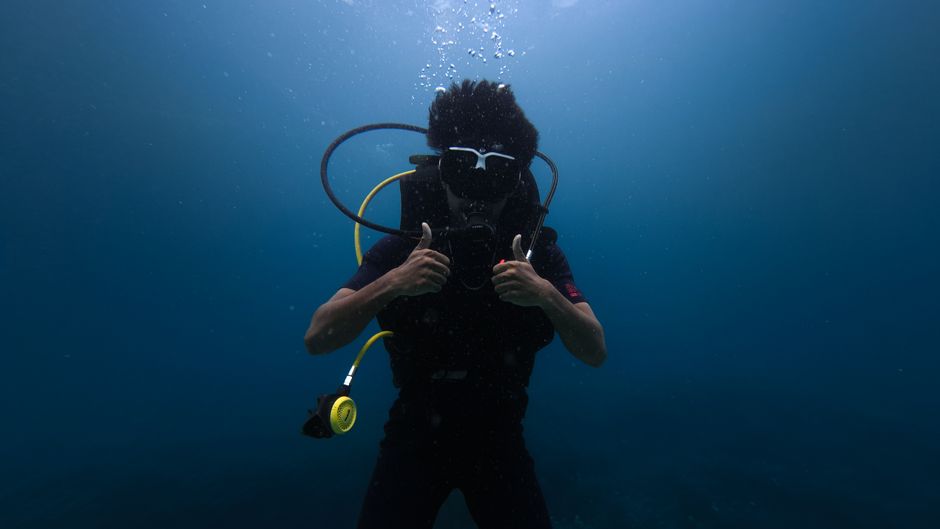
Goa is one of India’s easiest places to try scuba for the first time—especially in North Goa, where many dive operators run training and shallow “taster” dives around the coastal belt and nearby offshore islands.
This guide helps you plan like a beginner: where to go for your first session, how to choose a dive centre, which training path fits you (intro dive or full certification), and how costs typically break down—so you can book around sea conditions and actually enjoy the experience.
Best Places in North Goa for Beginner Scuba

1. Grand Island (First-Dive Focal Point)
Grand Island is the best-known nearby offshore option for North Goa dives. For beginners, it’s often where you’ll find the most consistent opportunity to see marine life during a guided session, while still staying within the limits of what your instructor plans for your comfort level.
When you’re booking, ask whether your plan includes a shallow warm-up and whether the day’s surface conditions look suitable for training. Many operators schedule beginner-friendly slots earlier in the day when seas are generally calmer.
Location: North Goa (off the Sinquerim–Candolim coast), Goa
2. Sinquerim Beach (Aguada Side)
Sinquerim is a handy north-coast beach base for divers. It’s close to the Aguada area, so operators can run morning departures without long transfers, which matters if you’re trying to avoid getting tired before your first check-out in the water.
For first-timers, this area is also useful if you want an easy day plan: brief briefing, gear fitting, then a simple intro session—before you spend the rest of the day at the beach.
Location: Sinquerim, Goa
3. Candolim Beach (Easy Access for Training)
Candolim’s main advantage is convenience. It’s a straightforward place to reach from Panaji and is popular with tourists who want a balance of calm and activity—useful when your dive day needs to be simple and on time.
Beginners often do best with operators that can provide clear depth progression (no rushing, plenty of time for comfort). Ask how they manage buoyancy and breathing practice before any longer swim.
Location: Candolim, Goa
4. Calangute Beach (Good “Base” for First-Time Days)
Calangute is one of North Goa’s most recognisable beach hubs, so it’s common to find dive centres coordinating pickup and briefings from this belt. That can make it easier to compare training schedules and choose the session that best matches tide and wind.
If you’re sensitive to choppy water, choose the earliest slot you can. Even with a well-run dive, rougher sea states can turn a first experience into a stressful one.
Location: Calangute, Goa
5. Baga Beach (Offshore Training Days)
Baga is another practical North Goa basepoint. Many travellers stay here because it’s well connected, and that usually translates to easier coordination for morning dive departures.
For beginners, the “win” is not just the location—it’s the plan. Before you pay, confirm whether the day includes a proper confidence-building warm-up (mask/fins practice, buoyancy basics) and whether you’ll have an instructor with you throughout.
Location: Baga, Goa
6. Anjuna Beach (Marine-Life Focus)
Anjuna is known for a laid-back beach scene, but it’s also a useful area for dive-day logistics along the north coast. If you’re staying here, you can often organise transport to match your dive window without overcomplicating travel.
Ask what you’ll likely see on your first dive and whether the route is adjusted for beginner comfort. Good beginner operators pick the dive conditions first, then match the dive to your level.
Location: Anjuna, Goa
7. Morjim Beach (North-Coast Calm Targets)
Morjim can be a great place to base yourself if you’re aiming for morning calm. North-coast wind patterns can vary day to day, so beginners should treat “morning slots” as a strategy, not just a convenience.
On any given day, visibility depends on sea and weather. Your instructor should be able to explain (in plain language) what visibility looks like and whether they’re changing the plan for safety.
Location: Morjim, Goa
8. Mandrem Beach (Less-Hectic Beginner Base)
Mandrem is a calmer alternative on the North Goa circuit, which can help when you’re trying to stay relaxed before your first dive. A stress-free morning matters—breathing and comfort training is easier when you’re not rushing.
If your dive centre offers either a shallow training option or a deeper “experience” format, pick the format that matches your comfort level, not the one with the flashiest description.
Location: Mandrem, Goa
9. Chapora Beach (Morning-Session Friendly)
Chapora is an easy-to-reach north-coast area and can be a practical base for beginner bookings. The key is to coordinate your session with sea conditions—if there’s wind or chop, the operator may shift timing or choose a different dive plan.
Before committing, ask what happens if conditions aren’t suitable: do they reschedule, switch to a more sheltered option, or pause the session?
Location: Chapora, Goa
10. Querim Beach (Near Tiracol Side)
Querim (near the Tiracol belt) is a scenic part of North Goa and can be useful when operators plan routes that suit offshore conditions. For beginners, the main benefit is that it can give you more scheduling flexibility if one coast section has rougher water.
When you’re booking, don’t just pick a beach—pick the plan your instructor will follow. A well-run “intro dive” prioritises comfort, breathing control, and gentle progression.
Location: Querim, Goa
Training Options for First-Time Scuba (Intro Dive vs Certification)

Intro dive (taster session)
An intro dive is for people who want to experience scuba gear and breathing underwater without committing to full certification training. You’ll usually do buoyancy and controlled movements with an instructor nearby, and the session is generally shorter than a certification course.
Best for: complete beginners, travellers on a tight schedule, or anyone who wants to “try it first” to see if scuba feels natural.
Certification (beginner course)
A certification course is designed to teach core skills properly—mask clearing, buoyancy control, controlled ascents/descents, and safe underwater behaviour—so you can dive more independently with the right supervision level.
Best for: people who want to scuba more than once, or who want skills rather than just a single experience.
What to ask in plain terms
Whether you choose intro dive or certification, ask these questions (a good instructor will answer clearly):
- How much of the session is water training vs “just looking around”?
- What depth will you work at for a first dive day?
- How do you handle equalisation and stress if a beginner feels uncomfortable?
- Is gear included, and is there an option for your own mask/fitting?
- Do you keep the group small enough for safe instruction?
What It Costs: A Beginner’s Budget for North Goa Scuba
Here’s the cost structure you should expect when you ask for quotes:
Intro dive costs (common bundle items)
- Instructor-led session (taster training + supervised underwater time)
- Gear rental (mask, fins, BCD, regulator, tank)
- Briefing and safety checks
- Sometimes boat transfer/entry logistics to the dive area
Typical range: in many North Goa packages, an intro session is often “a few thousand rupees” per person; you’ll usually see it rise when boat/outshore access is included.
Certification costs (common bundle items)
- Classroom or theory learning (often on the first day)
- Pool/confined water sessions (or local training water)
- Open-water dives for skill completion
- Training materials (varies by certification agency)
- Instructor time + gear rental
Typical range: beginner certification commonly costs “tens of thousands of rupees” because it’s multiple sessions over days, plus materials and more structured coaching.
Additional costs to watch for
- If you need medical/disclosure checks or any extra administrative documentation
- Video/photo add-ons (optional)
- Transport if your stay is outside the usual pickup zone
How to compare quotes fairly: ask every operator the same question: “What’s included in the total price?” If one quote looks cheaper, it may be missing boat logistics or gear, or it may reduce training time.
How to Choose a Dive Centre—and Book Around Sea Conditions
Good scuba for beginners is equal parts training quality and day-by-day conditions. Your operator choice matters, but so does how you schedule.
1) Choose dive centres that teach first, not just “sell dives”
Look for operators that:
- Explain the plan before asking you to pay
- Keep check-out skills (buoyancy, breathing, basic movement) front and centre
- Match the dive type to your comfort level (intro vs certification)
- Use safety processes consistently (briefing, buddy/instructor coverage, clear depth limits)
If you hear phrases like “you don’t need to worry” but no one explains what you’ll practise, that’s a red flag.
2) Pick your plan: intro dive for confidence, certification for progression
If you’re unsure whether scuba feels comfortable, choose an intro dive first. If you’re already motivated to explore underwater beyond one day, certification is usually the better value for long-term growth.
A practical rule: if you want to dive more than once during your Goa trip, certification often makes the schedule smoother because you’re not starting from zero each time.
3) Book around sea conditions (this is the real schedule “hack”)
North Goa diving is typically best outside the stormy monsoon months. In general, many travellers aim for:
- Best months: roughly October to March for more reliable water comfort and better visibility
- Use caution: April to May as temperatures rise and conditions can change
- Avoid for planning certainty: June to September (weather can be rough and plans may change)
Even in the “best months,” sea conditions vary. That’s why beginners should:
- Choose earlier morning slots when seas are often calmer
- Keep your itinerary flexible for rescheduling
- Ask your operator how they monitor conditions and what triggers a change of plan
4) Verify inclusions before you commit
Ask for:
- What certification level (if any) the session is aligned with
- Whether gear is included and if you can do a proper mask fitting
- Group size limits for beginner safety
If you want an easy way to compare schedules from different operators, you can check Viator for beginner-friendly scuba listings in North Goa.
5) Plan your day like a beginner
Once you book your session:
- Keep the rest of the day light (you’ll likely be tired after breathing exercises)
- Stay hydrated and avoid heavy meals right before the dive
- Follow instructor instructions on buoyancy and controlled breathing—this is what makes the dive enjoyable
:::faq
Q: Is North Goa good for beginner scuba diving?
A: Yes—many operators run intro dives and beginner training sessions along the North Goa coast, often with offshore options when conditions suit you.
Q: Should I do an intro dive or get certified right away?
A: If you’re unsure you’ll like scuba, start with an intro dive. If you want to dive multiple times and learn properly, certification is the better long-term choice.
Q: What is the best time of year for scuba in North Goa?
A: Generally, October to March offers the most reliable conditions. Monsoon months (roughly June to September) can disrupt plans.
Q: How do I choose a dive centre as a first-timer?
A: Choose one that focuses on skill training (breathing, buoyancy, basic movements), keeps safety briefings clear, and explains what’s included in the total cost.
Q: What does scuba diving cost for beginners in North Goa?
A: Intro dives are usually “a few thousand rupees” per person depending on whether boat access and gear are included. Certification is typically in the “tens of thousands” range because it includes multiple training sessions and materials.
Q: What should I do if sea conditions look bad on the day?
A: Ask how they make decisions—whether they reschedule, switch to a more sheltered option, or adjust the plan for safety.