

Goa’s North Coast is at its best when you see the shoreline from the sea—cliffs, forts, and those long stretches of sand moving past your boat window. If you’re specifically thinking about a beach-hopping boat tour from Calangute to Candolim, this list helps you plan the shore stops and understand what to book.
Below you’ll find 10 real, named stops (beaches and landmarks) that match the Calangute-to-Candolim route. After that, we’ll walk you through how to choose an operator, what should be included, rough cost expectations, and the weather/sea-state windows that make the day feel smooth (not squally).
North Goa Shore Stops (Calangute → Candolim Route)
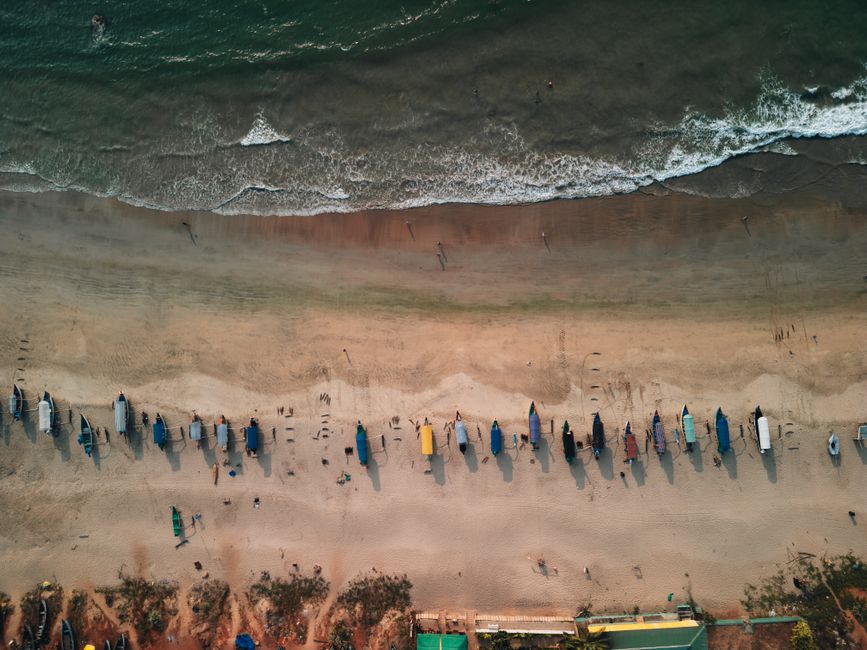
1. Calangute Beach (Departure Stretch)
Calangute is the most common starting point for coastal hopping because the beach is easy to reach from the main Calangute–Baga road. On boat tours, you’re usually looking for a spot where the boat can safely step passengers in and out—soft sand and calmer edges help.
For your plan, treat Calangute Beach as your “warm-up stop”: grab water, apply sunscreen, and confirm the exact timing and landing points before you head out.
Location: Calangute, Goa
2. Baga Beach (Optional North Stop)
Many itineraries add Baga if the schedule is flexible. It’s close enough to Calangute that operators can include it as a quick shore view (or a short swap if you’re doing a longer North-coast run).
If you’re booking a shared tour, Baga can be a helpful check-in point—just ask the operator whether the stop is strictly for photos/views or if you’ll actually be shore-dropped.
Location: Baga, Goa
3. Sinquerim Beach (Cliff-Edge Views)
Sinquerim is where the coastline starts to look more dramatic. From the water, you’ll get that classic North Goa combination of ocean swells, rocky edges, and the fort coastline in the background.
If you’re choosing a “shore-hopping” style tour, Sinquerim often works well as a short landing/view stop because it’s naturally oriented to coastal movement. Still, confirm the landing feasibility for that day’s tide and sea conditions.
Location: Sinquerim, Goa
4. Querim Beach (Quieter North-Coast Detour)
Querim Beach is a great “less crowded feel” detour on coastal routes heading toward the Fort Aguada area. It tends to feel more relaxed compared to the Calangute/Baga stretch, while still staying within reach for a day trip.
When booking, ask whether Querim is part of the planned route or only a weather-dependent detour. On calmer days, it’s ideal for an unhurried swim/pause; on rougher days, many operators will keep it as a view stop.
Location: Querim, Goa
5. Fort Aguada (Coastal Fort Stop)
Fort Aguada is one of the most recognisable landmarks on the North Goa coast. Even when you’re not doing a deep exploration, the fort’s positioning makes it a brilliant shore-hopping reference point from the sea.
For a boat tour day, Fort Aguada pairs well with a short landing or a “pass-by + viewpoint” stop. If the operator offers time on land, go early in the day so the light and crowds are manageable.
Location: Sinquerim, Goa
Aguada Side & Extra Detours

6. Aguada Lighthouse (Iconic Landmark)
The lighthouse area at Aguada is a strong photo anchor because it’s visible from multiple angles along the coast. From a boat, it’s easier to frame the coastline and fort contours than from the road.
If you want the best visuals, look for a schedule that doesn’t arrive too late afternoon. Mid-morning to early afternoon usually gives the most consistent visibility across the water.
Location: Aguada, Goa
7. Coco Beach (Mid-Route Sand Stop)
Coco Beach is often a convenient sand stop within the broader Candolim-Sinquerim coastline. If your tour includes a shore pause, this kind of stop usually works best for a quick walk, photos, and a short swim attempt.
When planning your “what to bring” list, treat Coco Beach as your likely swim moment—pack a towel, keep footwear easy to rinse, and wear reef-safe sunscreen.
Location: Candolim, Goa
8. Candolim Beach (Main Landing / Ending Stretch)
Candolim Beach is a natural end point for coastal hopping because it sits perfectly between the busier Calangute-Baga zone and the calmer pockets further south. It also makes it easier for you to return to your hotel afterward.
If your tour ends on Candolim, confirm your drop location (exact beach stretch), because Candolim is long and the last-minute distance to reception can vary.
Location: Candolim, Goa
9. Chapora Beach (Optional North Extension)
Some operators extend a Calangute-to-Candolim day to include a more photogenic North-coast stretch like Chapora. If the weather holds, it can turn your “coastal hop” into a fuller shoreline day.
Ask whether Chapora is an actual shore drop or a view-only glide. If it’s a drop, make sure you’re comfortable with the boarding/disembarking steps.
Location: Chapora, Goa
10. Chapora Fort (View-Stop Landmark)
Chapora Fort is perched above the Chapora coastline and is visible from sea angles that make it feel dramatic. Even if the tour is mostly about beaches, forts are often used as navigation points and viewpoint moments.
If the operator can add a short land stop here, it’s worth it—but only if sea conditions are steady and the timing gives you enough daylight for the views.
Location: Chapora, Goa
What to Book (Operator Choice, Inclusions & Rough Costs)

A “Calangute to Candolim boat-hopping tour” can be anything from a short, shoreline cruise with one shore pause to a longer route with multiple coastal stops. The key is to book the right format—and to ask the right questions—so the day matches your expectations.
1) Choose the right boat style (sea-view vs actual shore-hopping)
Start by clarifying what “shore-hopping” means to that operator. Look for one of these structures:
- Shared speedboat/shared cruise: lower per-person cost, but schedule is more fixed and your shore time may be limited.
- Private boat / charter: higher cost, but you control timing, stop count, and how long you stay on each landing.
- Photo-and-pass-by coastal cruise: includes landmarks from the sea, but land stops are shorter or not guaranteed.
For your route, you’ll generally want a boat that can manage frequent stops and has a captain who’s comfortable with coastal boarding. If the operator says “we’ll decide on stops once we reach,” ask how they decide and what happens if seas aren’t suitable.
2) What should be included (ask before you pay)
A reliable operator will clearly state what’s included. Aim to confirm these items up front:
- Life jackets for everyone on board (and the right size range)
- A captain/crew who handles navigation and shore coordination
- Basic on-board essentials (at least drinking water; sometimes fruit/juice—don’t assume)
- Shore drop details: which beach stretch, how long you’ll have, and whether it’s a swim-able landing
- Return plan: where you’ll be dropped back (Calangute vs Candolim) and the expected return time
If you’re comparing fixed schedules, Klook and Viator can help you shortlist options—but still verify the exact inclusions directly with the operator when you confirm.
3) Cost guidance (what you can realistically expect)
Goa boat pricing is usually driven by boat size, shared vs private, stop count, and duration, and it can change with season and sea conditions. Without making up exact figures, here’s a practical way to budget:
- Shared coastal hopping often starts at a few thousand INR per person.
- Private/charter typically costs several thousand INR to higher totals for the boat, especially when you add multiple shore stops.
The best way to get a usable number is to ask for:
- total duration,
- how many land stops,
- whether you’re paying per person or per boat,
- what happens if the operator shortens the route due to weather.
4) Safety checks that actually matter
Boat days in Goa can be fun and safe, but you should treat this like a real sea activity:
- Life jackets: confirm they’re available before departure.
- Seat/standing stability: ask how passengers board and move during stops.
- Sea-state awareness: if the operator looks hesitant or tries to “push through” big waves, it’s okay to walk away.
- Clear rules for shore time: ask where you’ll meet the boat, and whether someone stays in charge at the landing.
- Sun + hydration: Goa sun is strong even when the sea looks calm.
If anyone in your group is prone to motion sickness, bring medicine you’ve used before (and consider ginger chews). Also carry a waterproof bag for phones/IDs.
5) Day-of questions (quick checklist)
Before you hop on, ask:
- Where exactly is the boarding point?
- Which stops are guaranteed vs weather-dependent?
- What’s the minimum and maximum shore time per stop?
- Is the landing sandy or rocky (and will you need to wade)?
- What’s the return time window?
Best Time & Sea-State Windows (When Calangute–Candolim Works Best)
For a comfortable Calangute-to-Candolim boat hop, timing matters as much as the operator.
Best months
- November to March: generally the easiest window for calmer conditions and comfortable sightseeing.
- December to February: often the most pleasant overall, especially for getting clearer views of Fort Aguada and the coastline.
- June to September: monsoon months—expect rougher sea conditions more often, and operators may pause or shorten routes for safety.
Best time of day
In calmer seasons, many passengers prefer:
- Morning to early afternoon for better visibility and a more manageable sea state.
- Avoid late-afternoon if you notice wind picking up.
Sea-state rule of thumb
Even in good months, you should treat these signs as “rethink the plan” triggers:
- whitecaps building quickly,
- a noticeable increase in wind,
- choppy, short-period waves that make boarding unstable.
A good operator will adjust (shorter route, fewer land stops, earlier return) instead of insisting on a full itinerary.
Frequently Asked Questions
What’s the best way to choose a sea-view boat for a Calangute to Candolim tour?
Pick the format first (shared vs private, view-only vs true shore-hopping), then confirm life jackets, guaranteed vs weather-dependent stops, and the exact return drop location.
How much does a Calangute–Candolim boat-hopping tour cost?
Pricing varies by season and whether it’s shared or private, but expect shared options starting at a few thousand INR per person, and private charters costing several thousand INR for the boat.
Are shore stops always guaranteed?
Not always. Operators may keep stops weather-dependent if landing conditions are unsafe, rocky, or too choppy for boarding.
Which months are safest for boat tours on Goa’s North Coast?
November to March are generally the easiest months for calmer conditions. Monsoon months (June to September) are more unpredictable.
What should I bring for a boat day from Calangute to Candolim?
Life-jacket comfort won’t be your choice, so pack basics: sunscreen, water, a waterproof phone bag, towel, and motion-sickness help if you need it.
How can I tell if it’s a safe day to go?
If the sea shows strong wind-driven chop, frequent impacts, or the operator seems unsure about landing, prioritise safety and go for a shorter route or reschedule.